 Ikura Cart
How to Bring a Japanese Kitchen Knife Home by Plane
Updated 2026-09-25
Reviewed 2026-09-25
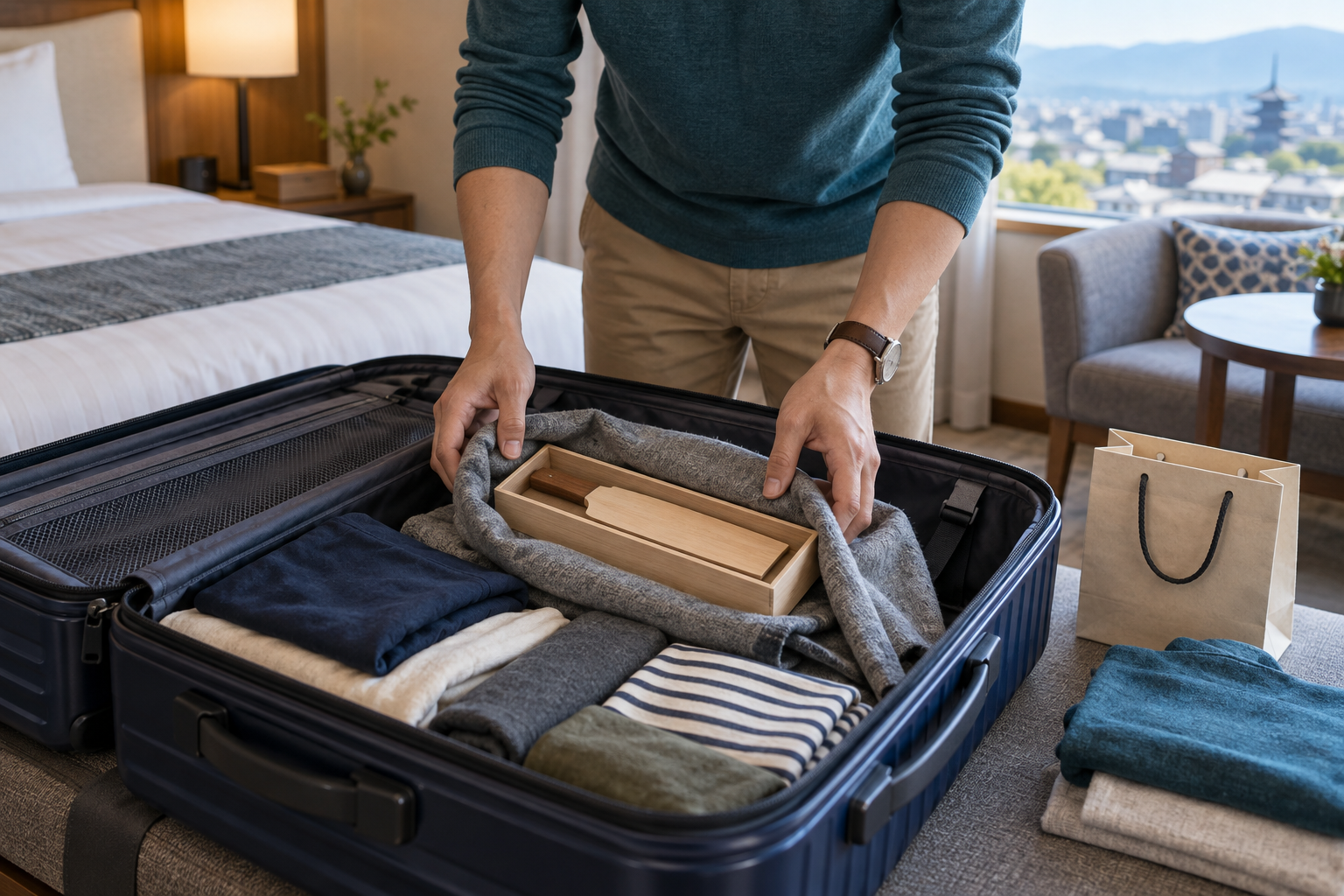
A Japanese kitchen knife can be a practical souvenir, but it should never reach the passenger cabin. The safe plan starts before purchase: confirm that your ticket includes checked baggage, keep the knife boxed, and verify the airline and destination rules for the exact item. Airport security, airline carriage and import law are three separate checks.
Put the knife in checked baggage, not carry-on
Japan's transport ministry says bladed items that could be used for hijacking or violence cannot be carried into the cabin. Narita Airport specifically lists knives and kitchen knives as cabin-prohibited and says they can generally go in checked baggage, although restrictions may vary by size and airline. Do not rely on a small-blade exception or leave the boxed knife in a shopping tote that will pass through security.
The same basic split appears in major destination guidance. The US TSA accepts knives in checked bags and not carry-on, the UK lists sharp or pointed knives as hold-baggage items subject to airline confirmation, and Australian Home Affairs bars knives and sharp kitchen utensils from the cabin. Your airline can still apply stricter conditions, so check its current restricted-items page before paying.
Ask for travel packing and secure every sharp edge
Tell the shop that the knife will travel in checked baggage. Keep the fitted box or sheath, cover the full cutting edge and tip, and stop the knife from sliding out. Then place the closed package inside the suitcase where it cannot move or cut through the lining. The TSA also requires sharp objects in checked bags to be sheathed or securely wrapped to protect baggage handlers and inspectors.
Keep the receipt and product description with your travel records. They can help show that the item is an ordinary kitchen tool and establish its value for customs, but a receipt does not make a prohibited knife legal. Decorative swords, automatic-opening knives, concealed blades and weapon replicas may follow different rules and should not be treated as kitchen utensils.
Plan transfers and carry-on-only tickets before buying
If the airline checks your suitcase through to the final destination, the knife normally stays in the hold. If you must collect and recheck the bag during a transfer, keep the package inside the suitcase and follow the next airport's rules. Never move it to hand luggage to reduce weight or repack after security. Confirm the process with each operating airline when separate tickets or an overnight transfer are involved.
A carry-on-only fare changes the decision. Buy checked baggage before the airport, ask the shop whether it can ship the item legally to your address, or do not purchase it. Postal and courier acceptance is separate from passenger baggage rules, and international shipping can trigger carrier restrictions, import tax and customs paperwork.
Check import law and tax-free steps separately
Before purchase, open the official customs and police guidance for the country or region where you will enter. Ordinary kitchen knives are not the same as prohibited weapon designs, but local possession, age, blade type and declaration rules differ. English-language readers should check their own authority, such as US Customs and Border Protection, the UK government or Australian Border Force, rather than applying another country's answer.
If the knife was bought tax-free, it must also satisfy Japan's current export-confirmation process. The procedure changes for purchases made from November 1, 2026, so use the dedicated Ikura Cart Guide tax-free reform article before putting the knife beyond reach. Ikura Cart can help confirm the product name and tax-inclusive price in the shop, but the airline and customs authorities decide whether and how it may travel.
FAQ
Can I carry a boxed Japanese kitchen knife onto the plane?
No. A box or gift wrap does not make a kitchen knife cabin-safe. Put it in checked baggage under the airline's rules and secure the blade and tip.
Is a Japanese kitchen knife allowed in checked baggage?
Generally yes under Japanese airport guidance, but the airline, transfer airport and destination can impose additional restrictions. Confirm the exact knife before purchase.
What if my ticket includes carry-on baggage only?
Add checked baggage, arrange compliant shipping with the seller, or skip the purchase. Do not take the knife to passenger screening and hope it will pass.
Do I need the receipt for a Japanese knife?
Keep it. The receipt helps identify the item and value for customs or airline questions, but it does not override weapon, import or tax-free rules.
Official sources
- Japan MLIT: Items Restricted in Cabin and Checked Baggage
- Japan MLIT: Representative Restricted Items, Updated April 2026
- Narita Airport: Cabin and Checked Baggage Restrictions
- Narita Airport: Prohibited Item FAQ
- TSA: Knives and Sharp Objects
- UK Government: Hand Luggage Restrictions for Knives
- Australian Home Affairs: Items You Cannot Take on a Plane