 Ikura Cart
Can You Combine Receipts for Tax-Free Shopping in Japan?
Updated 2026-09-21
Reviewed 2026-09-21
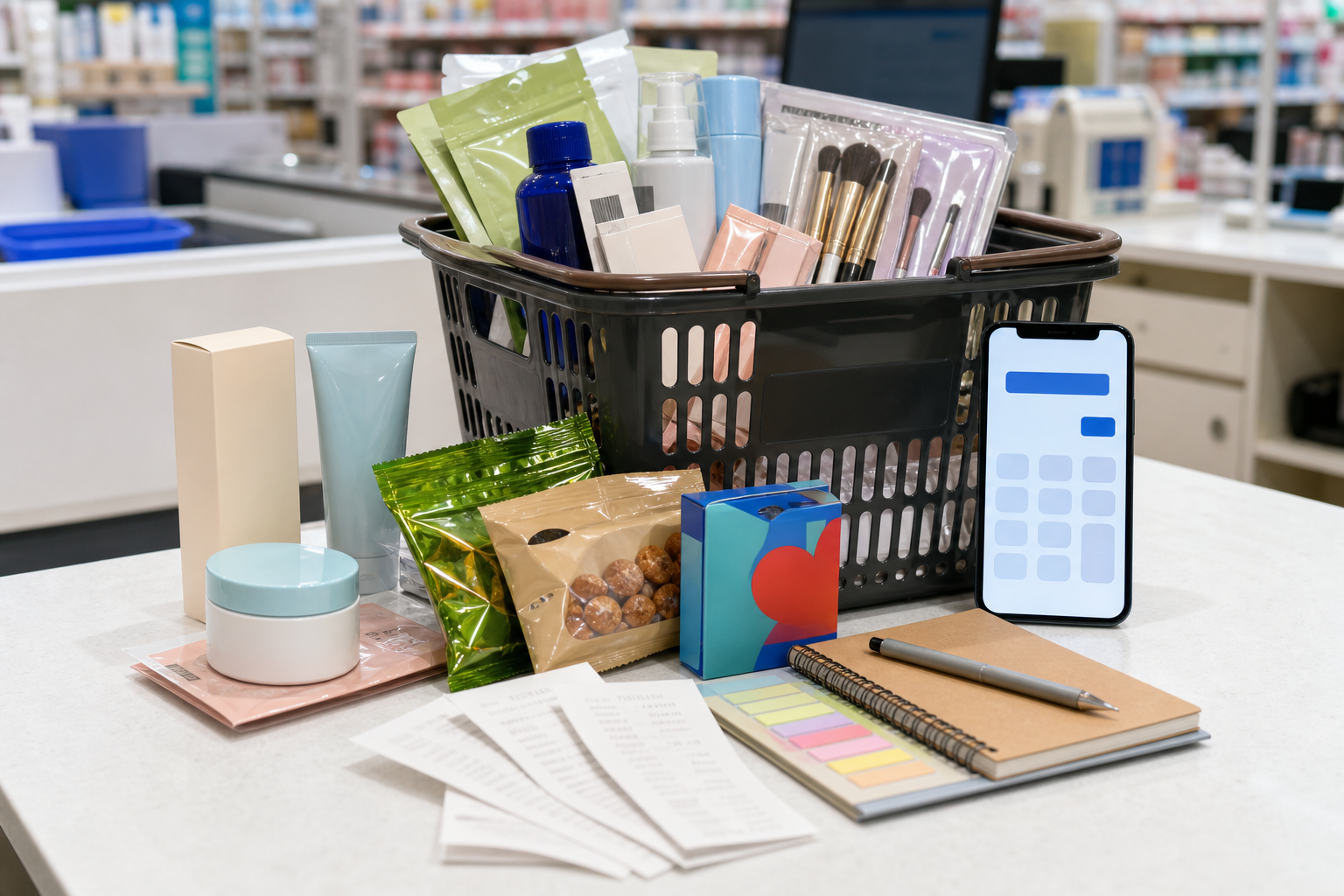
Japan's tax-free minimum is not just a basket total. It is checked by purchaser, store, day, product category, and sometimes the way the goods are packed.
Start with the store and the date
Under the current rules reviewed on 2026-07-18, the ¥5,000 threshold is based on the tax-excluded total at the same tax-free sales location on the same day. Splitting purchases across different branches usually does not help.
A department store or shopping center may run a central tax-free counter, but the practical rule still depends on that operator's counter system. Keep the receipts from the same day together and ask before you leave the floor.
General goods and consumables do not behave the same
Through 31 October 2026 two thresholds run side by side. General goods such as clothes, bags, stationery, and electronics need a tax-excluded total of at least ¥5,000. Consumables such as food, drinks, cosmetics, and medicine sit in a band from ¥5,000 up to ¥500,000 tax-excluded.
The important detail is that mixed baskets can become stricter. If general goods and consumables are combined to reach the minimum, the general goods are treated like consumables and may be packed so they cannot be used in Japan.
Two small receipts may or may not be useful
If you bought 2,800 yen of snacks at noon and 2,600 yen of cosmetics later at the same participating branch, the store may be able to process them together as consumables. If the second receipt is from another branch, another day, or a non-participating shop, expect it to be separate.
Do not assume the cashier can fix it after payment. Some stores require you to bring the goods and receipts to a tax-free counter on the same day, and some promotions or payment methods may not apply to tax-free sales.
Use the app for the math, then let the store decide the procedure
Ikura Cart is useful before checkout because it helps you read Japanese price tags and keep a running total. For this topic, focus on the tax-excluded subtotal by category, not only the big tax-included number on the shelf.
The store still decides whether receipts can be handled together, which counter accepts them, whether a mixed basket needs special packaging, and whether any coupon or campaign changes the final taxable base.
Ask these questions before you pay
- Can receipts from this same branch today be combined at the tax-free counter?
- Are these items treated as general goods, consumables, or a mixed purchase?
- If I combine them, will everything be sealed or unavailable for use in Japan?
- Is the ¥5,000 threshold checked before tax and after discounts?
- Do coupons, points, or campaign prices change tax-free eligibility?
From 1 November 2026 the two classes become one
From that date the general-goods and consumables classes are merged. The problem this article is about, which threshold a mixed basket follows, simply stops existing. Any goods at all count together once the tax-excluded total reaches ¥5,000, and the ¥500,000 ceiling and special packaging go with it.
What does not change is the other half of this article. The same sales location, same day condition stays exactly as it is. A different branch or a date rollover still cannot be added together, so it is still worth asking where the counter is and when it stops accepting paperwork.
FAQ
Can I combine receipts from two different stores in Japan?
Usually no. The official rule is based on the same tax-free sales location on the same day. A mall or department store may have its own central counter, so confirm on site.
Can general goods and consumables be combined?
Through 31 October 2026 they can be combined in some cases, but the combined purchase follows consumable rules. That may mean a 500,000 yen ceiling and packaging you cannot open.
Is the ¥5,000 minimum before or after tax?
It is based on the tax-excluded sales price. Discounts and store handling can affect the amount, so check the counter total.
Can I bring yesterday's receipt back today?
Do not rely on that. Store and official guidance focus on same-day handling, and retailers may require tax-free procedures during that day's business hours.