 Ikura Cart
How to Read Japanese Price Tags
Updated 2026-09-21
Reviewed 2026-09-21
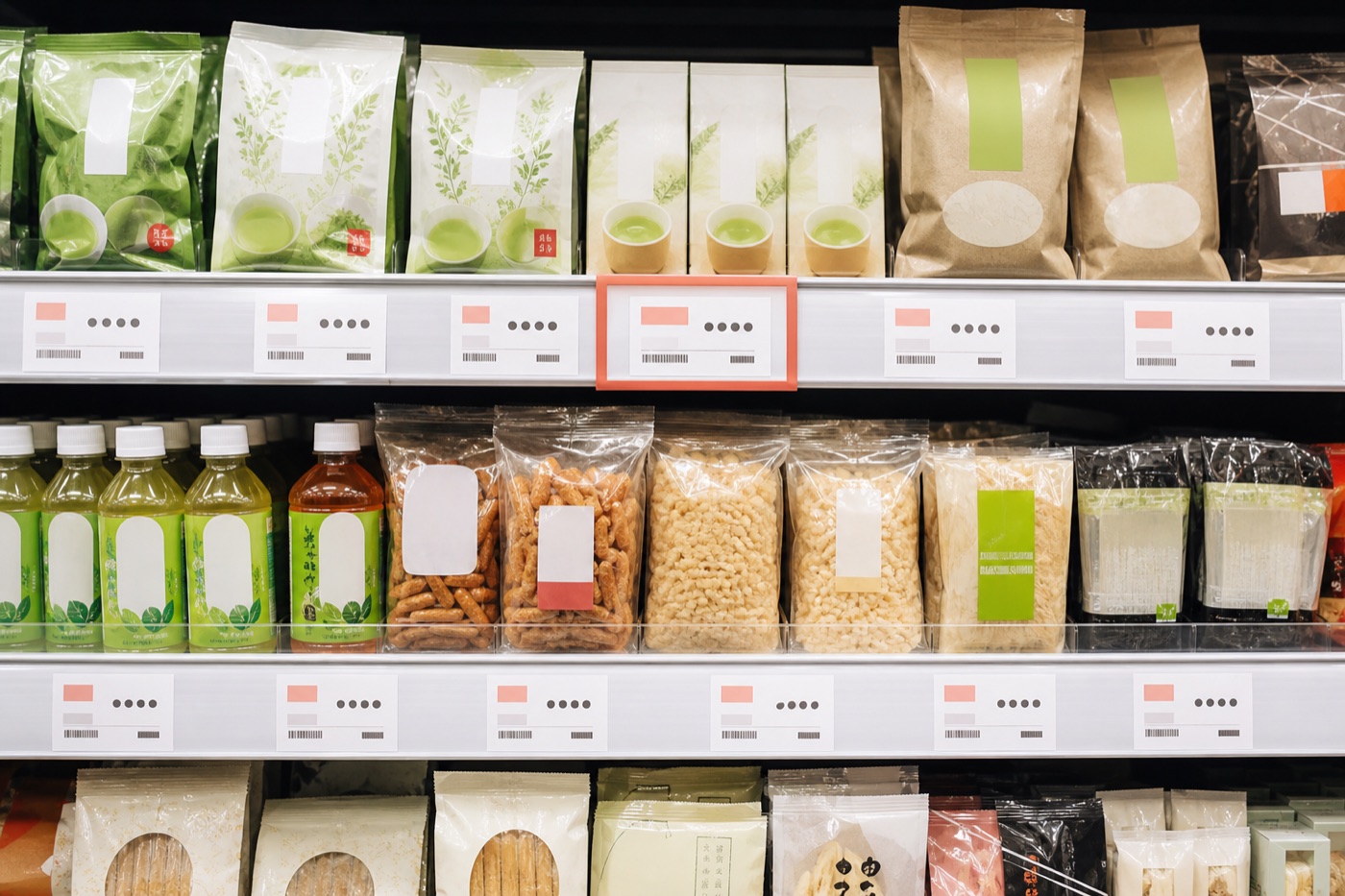
The largest number on a Japanese shelf tag is not always the checkout price. Find the three terms that matter, then use the smaller line to confirm whether tax is already included. If you are used to US or Canadian shelf prices, where tax appears only at the register, the surprise runs in your favour: a Japanese tag usually prints the tax-included total, marked 税込, somewhere on the label. If you are used to VAT- or GST-inclusive prices in the UK, Ireland, Australia, New Zealand or Singapore, the trap is the opposite one: the big number may be the pre-tax price, marked 税抜.
Three terms decode most price tags
税込 (zeikomi) means tax included and is usually the amount due at checkout. 税抜 (zeinuki) and 本体価格 (hontai kakaku) mean before tax. When two figures appear, the tax-included total is often the smaller one in parentheses.
"+税" means 'add tax'
If a tag shows a price followed by +税 (or 税別 / 外税), that number is pre-tax: you'll pay more at the register. Example: 本体価格 228円 +税 on a food item ≈ ¥246 at checkout (228 × 1.08).
8% or 10%? It depends on the product
Food & drink are taxed 8%; almost everything else (cosmetics, medicine, electronics, household goods) is 10%. So the same ¥1,000 pre-tax is ¥1,080 for a snack but ¥1,100 for shampoo.
Use the pair to check the tax rate
Divide 税込 by 税抜. A result near 1.08 points to the reduced food rate; a result near 1.10 points to the standard rate. The pre-tax figure is also the amount counted toward the tax-free minimum.
Scan first when the label is crowded
Ikura Cart reads a Japanese price tag and shows the likely checkout price, pre-tax amount and category. It is useful for a quick estimate; the shelf label and register remain the final reference.
FAQ
What does 税込 mean?
税込 (zeikomi) means the price already includes consumption tax: it's the amount you pay at the register.
Is 本体価格 the final price?
No. 本体価格 (and 税抜) is the price before tax. You'll pay that plus 8% (food) or 10% (other goods).
Why do tags show two prices?
Stores often print the pre-tax price large and the tax-included price small. Since 2021 the tax-included price must be shown, but the pre-tax number is often bigger.
Is food taxed at a lower rate?
Yes: food and non-alcoholic drinks use Japan's reduced 8% rate; most other goods are 10%.