 Ikura Cart
What to Do When Your Card Is Declined in Japan
Updated 2026-09-23
Reviewed 2026-09-23
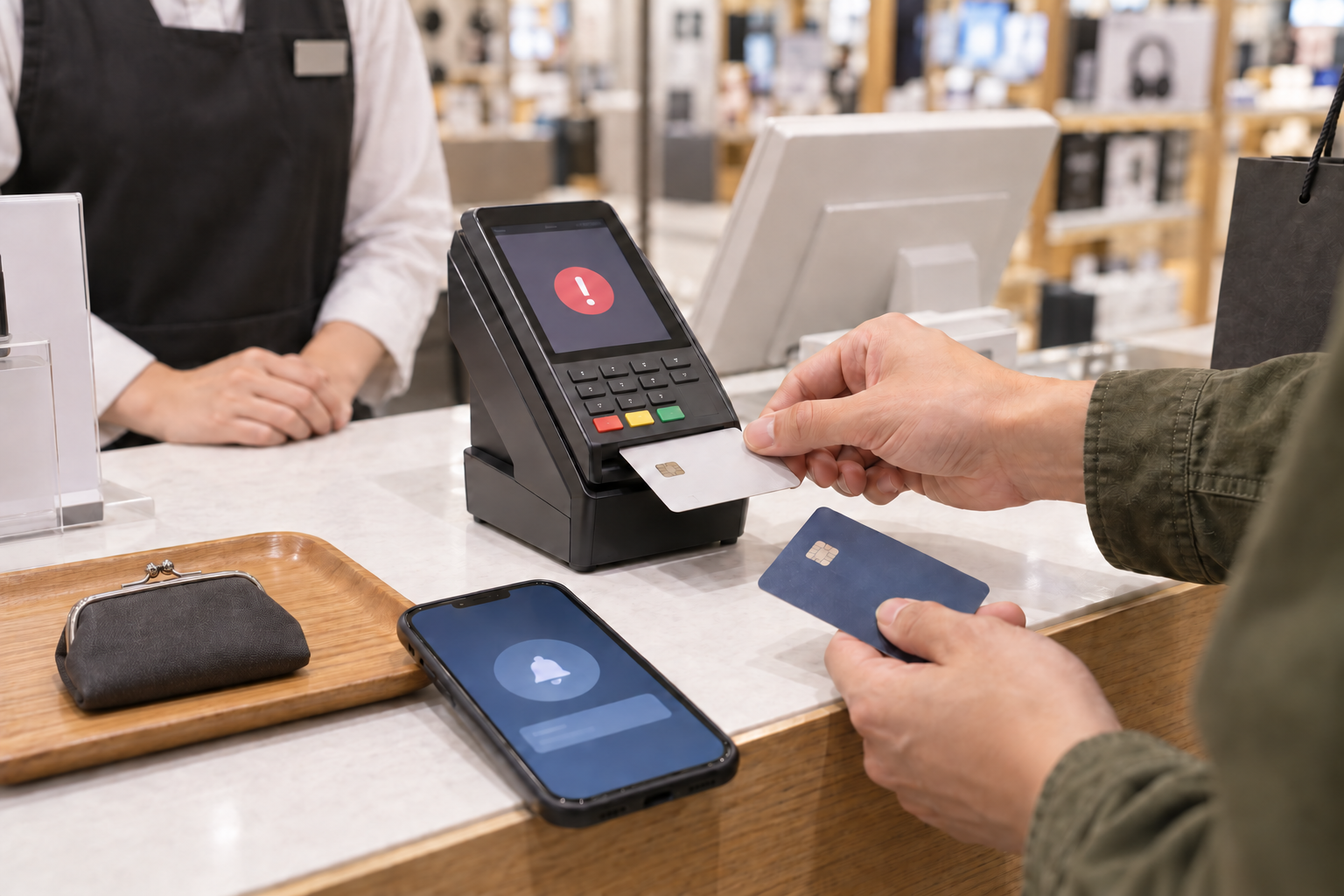
A declined card in Japan does not always mean the shop rejects foreign cards. The failure can happen at the terminal, at your bank, or during online identity verification. Identify which layer failed before repeating the payment, and keep a second card or cash available so the checkout does not become the troubleshooting desk.
First confirm whether the store and terminal support the card
Look for the network mark on the door or terminal and ask staff whether that specific card type is accepted. JNTO says international credit, debit, and prepaid cards are generally accepted, especially at major hotels, department stores, shopping centers, and urban restaurants, but acceptance is not universal. A contactless symbol also does not guarantee that every overseas phone wallet or card will work.
If tap fails, ask to insert the physical chip card and follow the terminal prompt. Enter the card PIN only on the payment terminal. A PIN is not the three-digit security code, and neither one is the one-time code used for an online 3D Secure check. Do not keep guessing a forgotten PIN because repeated wrong attempts can lock a card.
Check the issuer before trying the same card again
Open the issuer's official app or call the number on the card. Check that the card is active, overseas purchases are enabled, enough credit or account balance is available, and no fraud alert is waiting for your response. Visa notes that the issuer, not the shop or card network, is best placed to explain the exact decline reason.
Before paying another way, ask the cashier whether the first sale completed and check the issuer app for an authorization. A terminal error and a pending authorization can appear together. Save the receipt or failure slip and note the shop, yen amount, and time so the issuer can trace a duplicate or unresolved authorization later.
Online checkout failures are a separate 3D Secure problem
Japanese online merchants increasingly use EMV 3D Secure, an identity check handled between the merchant and the card issuer. A shop page may redirect to an issuer app, push approval, or one-time password. Make sure the issuer has your current phone number and email, allow the authentication page to open, and return to the merchant only after the bank confirms the result.
A correct card number can still fail if the issuer does not complete authentication, the verification window expires, or the merchant does not accept that foreign-issued card. Contact the issuer for a failed 3D Secure challenge. Trying a second card from a different issuer may work, but repeatedly resubmitting the same payment can create multiple pending authorizations.
Build a backup that works without the failed card
Carry two cards from different issuers or networks and keep some yen separate from your wallet. In places displaying the relevant mark, an IC travel card or a supported phone wallet can cover a smaller purchase, but JNTO warns that overseas smartphone payment methods may not work on every Japanese device or merchant setup.
Ikura Cart can help you confirm the tax-inclusive yen total before you switch payment methods, so you know how much cash or IC balance is needed. It cannot see the bank's decline code or unlock a card. Resolve that part only through the issuer's verified app, website, or phone number, never through a link in an unexpected message.
FAQ
Why did my card work at one Japanese store but fail at another?
Merchants can support different networks, terminal methods, and fraud controls. Ask whether the exact card is accepted, try the physical chip once if tap failed, then check the issuer app instead of assuming all foreign cards are blocked.
Should I keep tapping after a declined payment?
No. Confirm whether the sale completed, check for a pending authorization, and retry only after changing a relevant factor such as inserting the chip or clearing an issuer block.
Is my card PIN the same as a 3D Secure code?
No. The PIN is entered on an in-store terminal. A 3D Secure approval or one-time code comes from the issuer during an online payment, while the security code is printed or displayed with the card details.
Who can tell me the exact reason my foreign card was declined?
Your issuing bank or card provider. The cashier can confirm store acceptance and whether the sale completed, but the issuer controls account status, overseas locks, limits, and fraud decisions.