 Ikura Cart
Plan a Japan Shopping Budget You Can Update Every Day
Updated 2026-09-21
Reviewed 2026-09-21
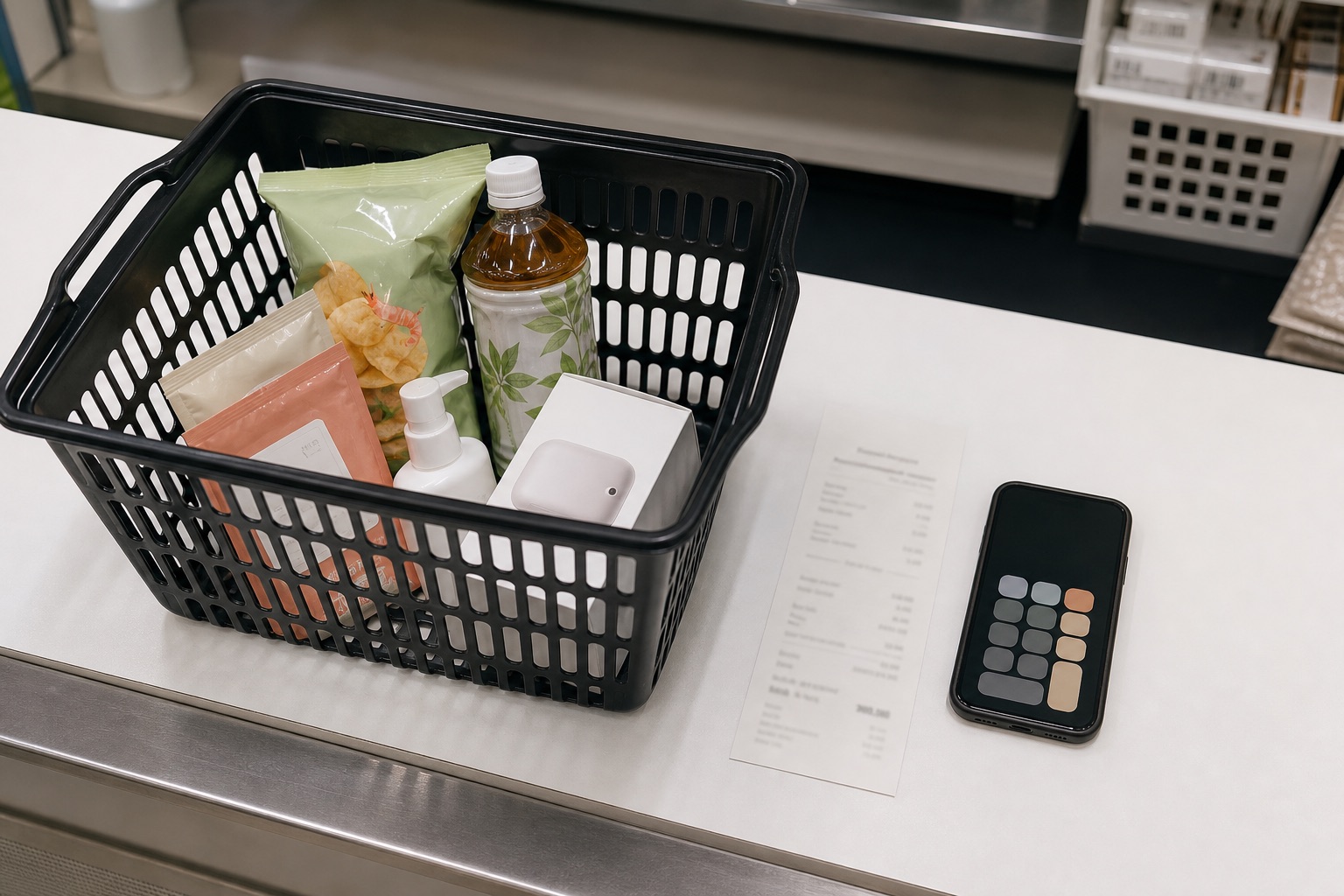
A useful Japan shopping budget is not one large number written before departure. Split the trip into shopping and daily travel costs, choose a working exchange rate, and update the amount after each real receipt.
Separate shopping money from daily travel costs
Start with the total amount you are comfortable spending, then reserve money for accommodation already due, transport, meals, tickets and emergencies. The remainder is the shopping budget, not the whole bank balance available to the trip.
A separate shopping amount makes decisions clearer in a drugstore, department store or discount shop. You can compare a basket against the money intended for purchases without hiding tomorrow's train or meal costs. Two habits from home change the arithmetic. Japan has no tipping culture: the Japan National Tourism Organization says that in restaurants, hotels, taxis and other services you pay only the amount shown on the bill, so readers from the US and Canada can delete the tip line they would normally add to every meal and taxi ride. Consumption tax is also simpler than a US-style sales tax that changes by state or city. It is one nationwide tax, 10% on most things and 8% on takeaway food and non-alcoholic drinks, closer to VAT in the UK and Ireland or GST in Australia, New Zealand and Singapore.
Use a working yen rate, not a perfect prediction
Choose a recent rate for planning and leave a small buffer rather than trying to predict the exact card charge. Exchange rates move, and the card issuer may add a spread or foreign transaction fee.
If a payment terminal offers yen or your home currency, compare the choice carefully. A terminal's home-currency amount is dynamic currency conversion and may use a different rate from your card.
Calculate what you can spend today
Divide the remaining flexible budget by the days left, but treat that daily number as guidance rather than a target. A quiet day can leave more for a planned shopping stop; a large purchase should reduce the allowance for later days.
Ikura Cart can store a trip budget and end date, then recalculate an estimated amount available per day as recorded spending changes.
Track cash, card and IC balance separately
Cash remaining is useful only when it reflects the cash transactions you actually recorded. Card purchases belong in the trip total too, but they do not reduce the notes in your wallet. A stored-value IC card such as Suica or PASMO is a third bucket. You pay for it when you top it up, in cash or through a phone wallet, and every later tap shows up nowhere, so a day of tapping can look like a day of spending nothing. Record the top-up as the expense and keep an eye on the remaining balance.
Record the payment method with each expense. If you pay for a companion and they reimburse you, record the repayment so the personal trip total does not stay artificially high.
Close the loop with receipts
After checkout, replace the estimated basket with the confirmed receipt amount when needed. Discounts, coupons, tax handling or quantity corrections can make the final total different from the shelf estimate.
Review the budget at the end of the day, not after every few minutes of the trip. The goal is to make tomorrow's choices clearer while keeping the current day enjoyable.
FAQ
How much should I budget for shopping in Japan?
There is no universal amount. Reserve essential travel and emergency costs first, then set a separate shopping limit that fits your trip length and planned stores.
Should I calculate my Japan budget in yen or my home currency?
Track the working budget in yen because purchases happen in yen, while keeping a home-currency estimate for perspective. The final card charge may differ.
How do I calculate a daily Japan travel budget?
Subtract recorded spending and reserved fixed costs from the trip budget, then divide the flexible remainder by the days left. Recalculate after large purchases.
Can Ikura Cart track both shopping and other travel spending?
Yes. It can keep cart items, receipt totals and expenses such as meals, transport and tickets in one trip record, with cash and card separated.