 Ikura Cart
How to Read a Japanese Shopping Receipt
Updated 2026-08-14
Reviewed 2026-08-14
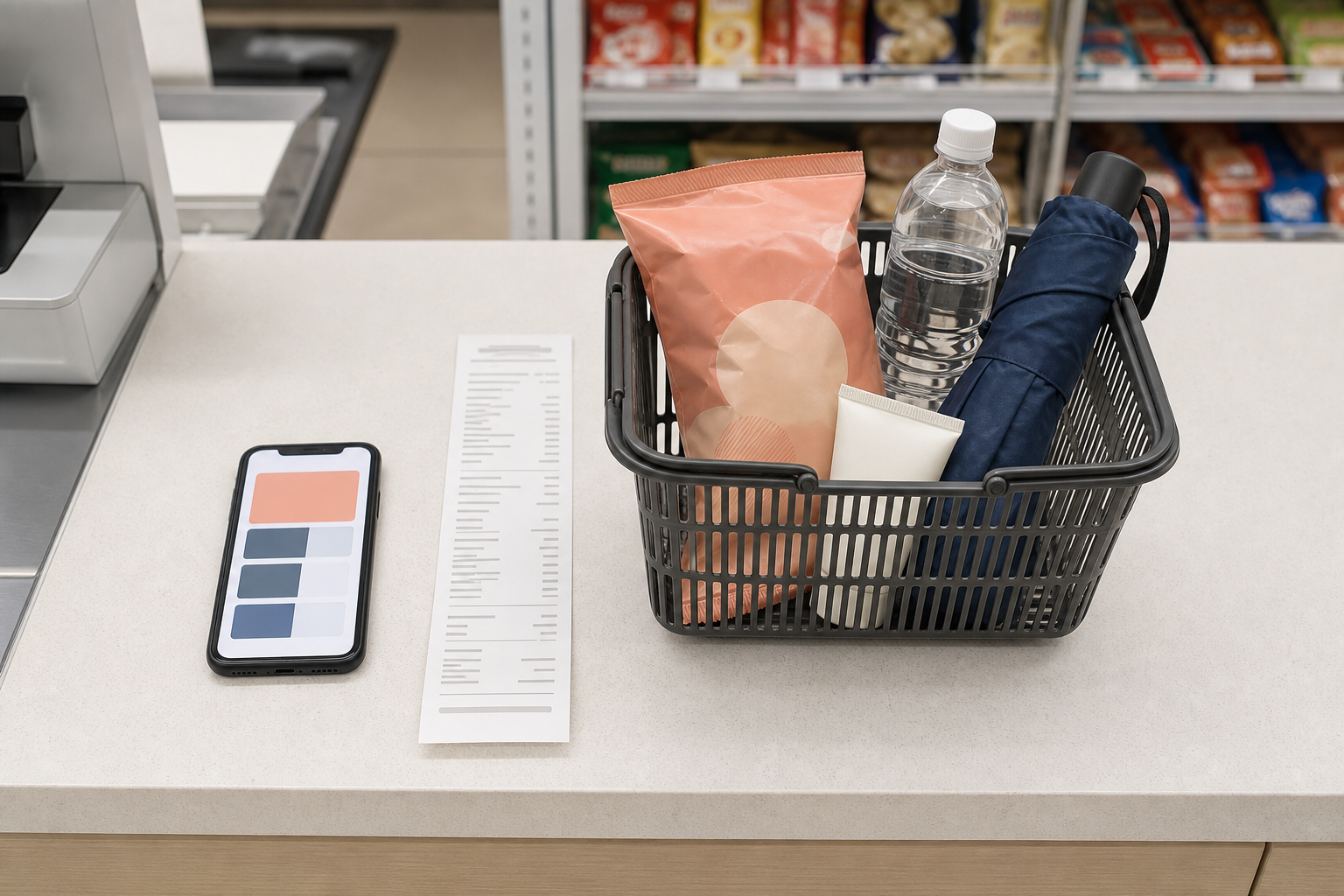
A Japanese receipt can look dense even when you bought only a few things. You do not need to translate every abbreviated product name. Start with the final charge, then work backward through discounts, tax groups and payment details. This order answers the practical question: did the register charge what you expected?
Find the final total before translating the products
Look near the lower half for 合計 or お買上合計. That is usually the final amount due. 小計 means subtotal, but its exact position in the calculation varies by register: it may appear before a coupon, after item discounts or before a separate tax line. Do not treat 小計 as automatically tax exclusive.
At the top, confirm the shop, branch, date and time. On item lines, 単価 is unit price, 数量 is quantity and 点数 is item count. Names are often shortened, so match a questionable line by price and quantity before trusting a camera translation.
- 合計: final total
- 小計: subtotal at that register's calculation stage
- 単価 and 数量: unit price and quantity
- 日時 and 店舗: transaction time and branch
Separate discounts from points and cash received
値引 and 割引 indicate a price reduction. A coupon may appear as クーポン, while ポイント利用 means points were spent. ポイント付与 or 獲得 usually records points earned for later and does not reduce this transaction. A minus sign beside the line is the quickest confirmation that the current total changed.
For cash payments, お預り is the amount handed to the cashier and お釣り is the change returned. Neither is another purchase charge. Card and IC payments may instead show クレジット, 電子マネー, 交通系IC or 支払, often with no change line.
Read 8% and 10% as two grouped tax buckets
Japan's standard consumption tax rate is 10%. The 8% reduced rate generally covers food and non-alcoholic drinks sold for takeaway, while alcohol and dining in are outside that reduced category. A mixed convenience-store or drugstore receipt can therefore show both 8%対象 and 10%対象.
A symbol such as ※ or * may mark reduced-rate items, followed by a note like 軽減税率対象. The symbol is store-specific, so read the legend printed on that receipt. 税込 means tax included, 税抜 means before tax and 内消費税 identifies tax already contained in the total.
Check the arithmetic without forcing every line to match
For a tax-included group, the included amount is approximately total × 10 ÷ 110 at the standard rate or total × 8 ÷ 108 at the reduced rate. A receipt may round by tax category or at the transaction level, so adding tax to each product separately can differ by one or more yen from the printed total. Use the register's grouped figures as the final record.
If the total, quantity or payment method is wrong, ask while you are still at the counter. Keep the original receipt for returns, warranty questions and tax-free corrections. Ikura Cart can help identify an abbreviated product name or compare the receipt with a photographed shelf label, but the shop's receipt remains the proof of purchase.
FAQ
Does 小計 mean the price before tax?
Not always. It means subtotal, but registers place discounts and tax at different stages. Check 税込, 税抜, the tax-rate groups and 合計 before deciding what the subtotal includes.
Why does one Japanese receipt show both 8% and 10%?
The basket contains items in different tax categories. Takeaway food and non-alcoholic drinks are commonly 8%, while general goods, alcohol and dining in are generally 10%.
What are お預り and お釣り?
お預り is the cash accepted from you. お釣り is the change returned. The purchase charge is the number beside 合計, not the larger cash-received amount.
Why is my manual tax calculation one yen different?
The register may round after grouping items by tax rate rather than on every line. Compare the printed 8% and 10% groups and final total instead of forcing line-by-line tax to match.
Official sources
- Japan National Tax Agency: Basic knowledge of consumption tax
- Japan National Tax Agency: Reduced tax rate system overview
- Japan National Tax Agency: Sample receipt with 8% and 10% groups
- Japan Ministry of Finance: Total price display and rounding Q&A
- Japan National Tax Agency: Records required for tax-rate categories
- JNTO: Japan shopping questions and answers
- National Consumer Affairs Center of Japan: Consumer Hotline for Tourists