 Ikura Cart
Does Your Payment Card Name Need to Match Your Passport?
Updated 2026-09-21
Reviewed 2026-09-21
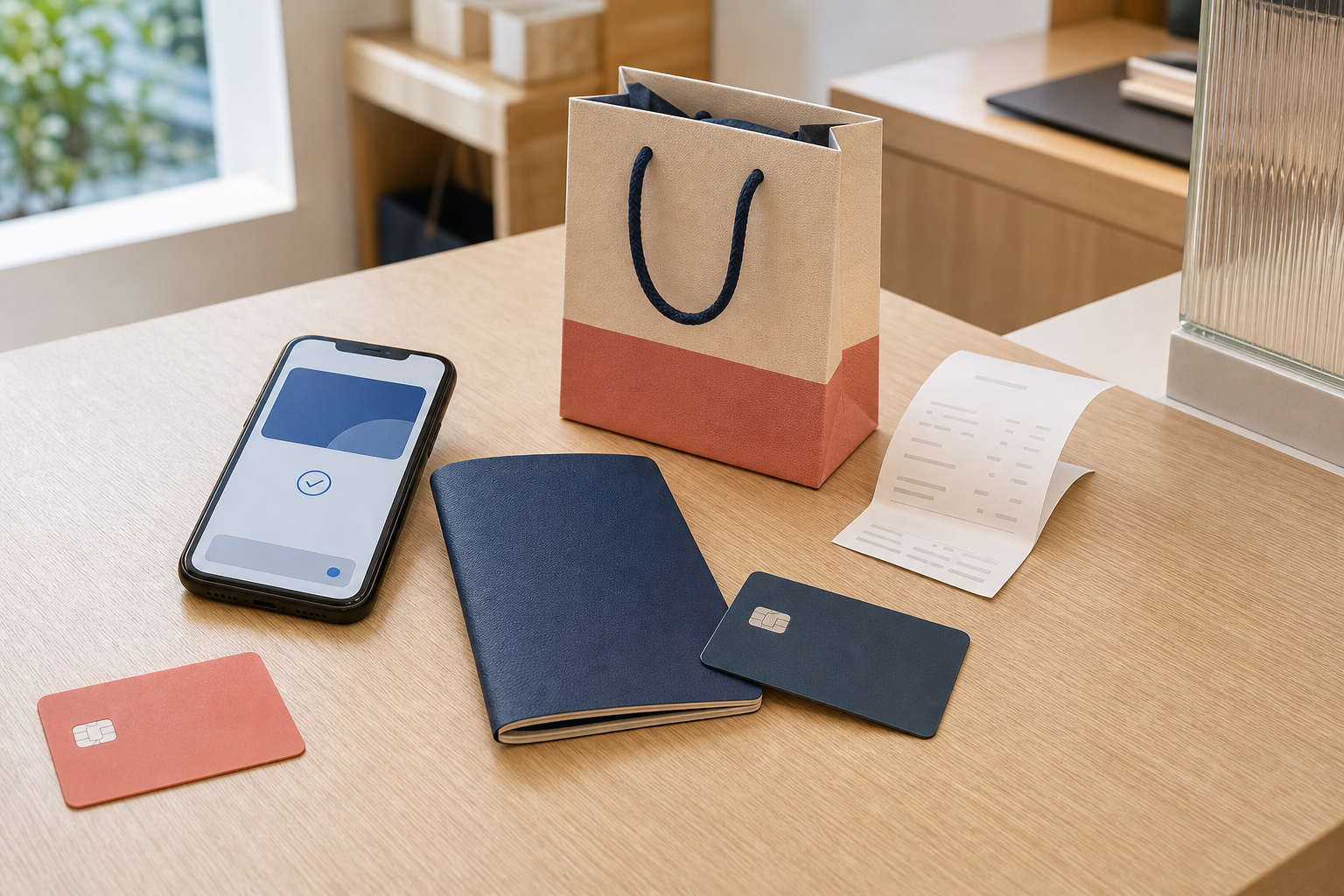
For a smooth tax-free purchase in Japan, treat the passport holder, shopper, payer, and person carrying the goods out of Japan as one person. A companion's card can turn an otherwise eligible basket into a counter refusal.
The passport holder is the recorded purchaser
Under the rules reviewed on 2026-08-03, a tax-free shop must confirm eligibility from the purchaser's own passport or accepted Visit Japan Web information. The purchase record is linked to that traveler, who must possess the goods at departure and take them out of Japan.
The official traveler notice excludes purchases for business, resale, or on behalf of a third party who requested them through social media or another method. It also forbids transferring tax-free goods to someone else while still in Japan. A passport is not a group discount card for a family or tour party.
Card-name checks are a real counter condition
A tax-free shopping guide published by the Japan Shopping Tourism Organization says that when a credit card is used, its name must match the passport or other qualifying document. Major department-store counters publish the same condition and may ask to see the card used for the purchase.
Expect the check to apply to a credit card, debit card, UnionPay card, or other named payment method when the store's procedure says so. Mobile payment does not guarantee an exception because the counter may still need to identify the underlying account or refund destination. Store systems differ, so ask before paying if the displayed names are not identical.
Plan one clean buyer for a family basket
The safest family arrangement is for each tax-free buyer to show their own passport and use their own named payment method. If one adult buys everything under one passport and card, that adult becomes the recorded purchaser and must keep all of those goods available for export inspection.
A souvenir that the purchaser chooses and carries abroad is not the same as buying on someone else's behalf or for resale. Do not hand tax-free goods to a relative who is staying in Japan, divide the recorded basket among travelers before departure, or use one person's passport with another person's card merely to reach the minimum.
Fix a mismatch before the cashier closes the sale
Carry a card whose name matches your passport. If the card says Bill where the passport says William, shows only initials, drops a middle name or a Jr., or uses a former surname, show it to the tax-free counter before checkout and ask whether it is acceptable. Do not assume that a relationship or joint bank account overrides the store's identity check.
If the names cannot be accepted, ask whether you can pay in cash or let the eligible companion become the actual purchaser with that companion's own passport and payment method. Cash only removes the card-name question; it does not change who must export the goods. Ikura Cart can help split and total the baskets before payment, while the store decides the tax-free procedure.
- Use the purchaser's own passport or accepted Visit Japan Web tax-free code
- Use a payment card bearing that purchaser's name
- Keep the receipt, payment method, and all recorded goods together
- Ask the counter before paying when names or family roles differ
FAQ
Can my spouse pay for my Japan tax-free purchase?
A store may refuse tax-free processing when the spouse's card name differs from the purchaser's passport. Use the same person's passport and named card, or ask about cash before paying.
Can one parent put the whole family's shopping on one passport?
That parent becomes the recorded purchaser and must personally possess and export all recorded goods. Separate buyers should use their own passports and payment methods when the goods will be divided.
What if my card omits my middle name?
Acceptance depends on the counter's identity check. Show the card and passport before checkout, carry another card with a closer match if available, and be ready to use cash if accepted.
Does paying cash allow tax-free shopping for someone else?
No. Cash may avoid a card-name mismatch, but the eligible purchaser must still complete the procedure, keep the goods, and take them out of Japan.
Official sources
- National Tax Agency: Eligible Tax-Free Purchasers and Store Procedure
- National Tax Agency and Japan Customs: Notice to Foreign Travelers
- Japan Customs: Consumption Tax Exemption for Visitors
- Japan Tourism Agency: Rules After a Store Becomes Tax-Free
- Japan Shopping Tourism Organization: Tax-Free Shopping Guide
- JR Nagoya Takashimaya: Tax-Free Procedure and Card Name Rule
- Hankyu Hanshin Department Store: Tax Refund Information