 Ikura Cart
How to Check Japanese Cosmetics Expiration Dates
Updated 2026-09-18
Reviewed 2026-09-18
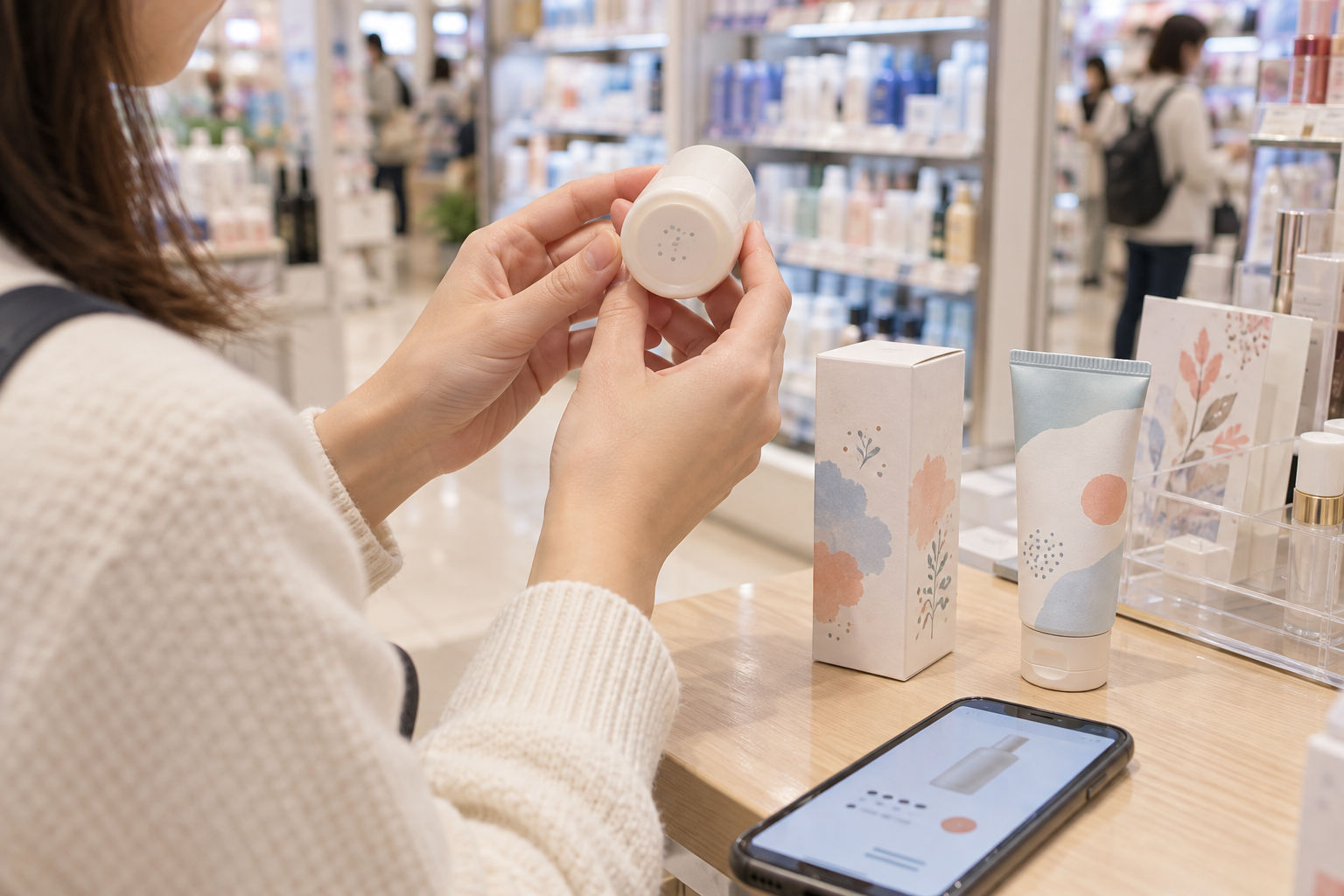
Turn over a Japanese sunscreen or face cream and you may find a short code but no obvious expiration date. That is often normal, but it does not make the product timeless. The useful question is whether you found a real date, a manufacturing date, or only a lot number that the maker uses for traceability.
No printed date does not mean no shelf life
Japan's Pharmaceuticals and Medical Devices Act requires cosmetics to carry a manufacturing number or code. A use-by date is required for designated products, including cosmetics likely to change in quality within three years after manufacture or import under appropriate storage conditions. Products outside that group may be sold without a printed expiration date.
The three-year rule describes unopened stability under appropriate storage, not three years from the day you buy it. A dateless bottle might have spent time in distribution or on a shelf, and the missing date alone cannot tell you when it was made. It is also not a promise that every opened product lasts three years.
Identify the mark before trying to decode it
使用期限 is a use-by date, while 製造年月日 is a manufacturing date. 製造番号, 製造記号, and ロット identify a production batch. A JAN barcode identifies the retail product, so it is not an expiration date. An eight-digit string can be a date on one product and a lot code on another.
There is no single public decoder for every Japanese cosmetics maker. Kao, for example, publishes an eight-digit manufacturing-date example for a particular Biore cleanser, but that pattern should not be copied to unrelated brands. Third-party batch checkers may offer estimates; for a dependable answer, contact the manufacturer with the exact product name, lot mark, and photos of both the container and box.
Opening the package changes the decision
Japan does not give every cosmetic one universal period after opening. Formula, container, storage, and the maker's own instructions matter. Some brands publish a product-specific freshness period, while others tell customers to use an opened item promptly. Record the opening month instead of applying an internet-wide six-month or twelve-month rule to everything.
Stop using a product if its smell, color, separation, or texture differs from when it was purchased. Keep the opening clean, close the cap fully, and avoid direct sun, high humidity, heat, and large temperature swings. If skin irritation appears, stop use and follow the manufacturer's safety advice.
A two-minute check at the store prevents guessing later
Before checkout, inspect both the outer box and the container. Photograph any 使用期限, 製造年月日, lot mark, and storage instruction; ask staff whether the box is from current stock if the print is smudged or hidden by a sticker. Keep the receipt until you have confirmed the item and the store's return conditions.
Ikura Cart can help you capture Japanese label wording and compare the tax-inclusive price while shopping. Use it to save what is actually printed, then rely on the brand for an unpublished lot-code key or product-specific usable period. Do not turn an app or unofficial decoder estimate into a guaranteed expiration date.
FAQ
Why is there no expiration date on my Japanese sunscreen?
Many cosmetics that are not expected to change within three years under appropriate unopened storage do not have to print one. Check for a real use-by date and do not mistake the lot code for a date.
Can I add three years to a Japanese cosmetics batch code?
Not safely. A lot code is not automatically a manufacturing date, and formats vary by maker and product. Ask the manufacturer to identify an unclear code.
Does no date mean the cosmetic is good for three years after purchase?
No. The rule concerns stability after manufacture or import under suitable unopened storage. It does not restart at retail purchase.
How long can I use Japanese skincare after opening?
There is no universal period for every product. Follow the package and maker, note when you opened it, store it correctly, and stop if its smell, color, separation, texture, or effect on your skin becomes abnormal.
Official sources
- MHLW: Pharmaceuticals and Medical Devices Act, Article 61
- MHLW: Products Required to Show a Use-by Date
- Japan Cosmetic Industry Association: Cosmetics Q&A
- Japan Cosmetic Industry Association: Consumer Information
- Shiseido: Why Some Cosmetics Have No Use-by Date
- Shiseido: How Long to Use Cosmetics After Opening
- Kao: Biore Product Date and Lot Examples
- FANCL: Product-specific Freshness Periods