 Ikura Cart
How to Read Expiration Dates on Japanese Food
Updated 2026-09-21
Reviewed 2026-09-21
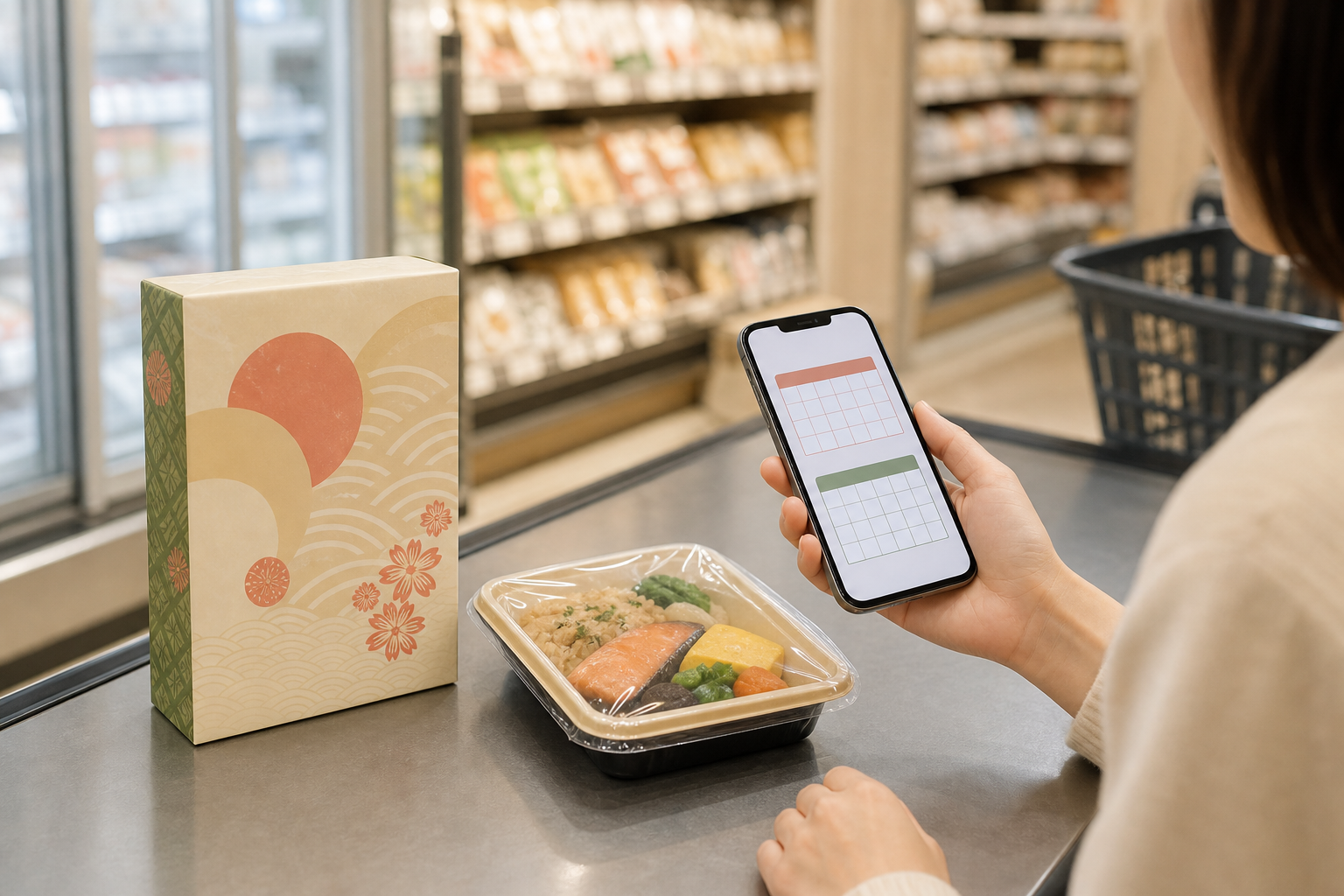
The date on a Japanese snack is not automatically an expiry warning. First identify whether the package says 賞味期限 or 消費期限, then read the numbers in Japanese order and check the storage instruction. Those three steps tell you far more than a camera translation of the date alone.
Start with 賞味期限 or 消費期限
賞味期限 is the best-before date. It marks the period during which an unopened product, stored as directed, is expected to retain its intended taste and quality. It is common on snacks, instant noodles and canned food. Passing this date does not by itself mean the food became unsafe at midnight.
消費期限 is the use-by date for food that deteriorates quickly, such as boxed meals, sandwiches, prepared dishes and fresh sweets. Japan's official consumer guidance says to observe this date. Do not treat a use-by product like a shelf-stable souvenir.
- 賞味期限: best-before, mainly about expected quality
- 消費期限: use-by, mainly about safety for perishable food
- 製造日 or 製造年月日: manufacture date, not the deadline
- 保存方法: the storage condition that makes the date valid
Read the numbers as year, month, day
Japanese food dates normally run from largest unit to smallest: year, month, day. 2026.09.08 means September 8, 2026, not August 9. Separators may be dots, slashes or Japanese 年, 月 and 日. A compact six-digit code such as 260908 can also represent 2026, 09, 08 when it is clearly tied to the date label.
Longer-lasting products may show only a year and month, for example 2027.03. Japanese rules allow month-only best-before labeling when the period from manufacture exceeds three months. It is not a missing manufacturing day. Use the printed month for planning and choose a comfortably later month if the food is a gift.
The date works only with the stated storage and an unopened pack
Both dates assume the package is unopened and kept according to the label. 要冷蔵 means refrigeration is required, 要冷凍 means keep frozen, and 直射日光・高温多湿を避けて保存 means avoid direct sun, heat and humidity. A refrigerated sweet carried warm for hours has not followed the condition behind its printed date.
Once opened, the original date no longer promises the same period. Follow any after-opening instruction and consume promptly. Also reject a leaking, swollen, unsealed or badly damaged package even when its printed date is still ahead.
Use a four-check souvenir test before paying
Check the label type, remaining time, storage condition and package integrity. Add the days until you return home and the time before you will give or eat the souvenir. A chilled item with a near use-by date may be fine for tonight but a poor choice for an international flight. A sealed shelf-stable snack with a later best-before month is usually easier to plan, but arrival rules at home still apply separately. Australia requires you by law to declare certain food, plant material and animal products, and officers can issue an infringement notice for undeclared goods. New Zealand requires all food to be declared and sets a NZD$400 instant fine for a false declaration. US Customs and Border Protection requires all agriculture items to be declared and can issue a civil penalty for an undeclared prohibited item. When unsure, declare the snack and let the officer decide.
The date may be printed away from the ingredients panel. Look for pointers such as 枠外下部に記載 or 底面に記載, which mean the mark is elsewhere on the pack. Ikura Cart can help identify the Japanese product and label text while you compare packages, but the manufacturer's printed date and storage instruction are the final reference.
FAQ
Is 賞味期限 the same as an expiration date?
Not exactly. It is a best-before date for expected quality under the stated unopened storage conditions. 消費期限 is the stricter use-by date for rapidly perishable food.
Does 2026.09.08 mean September 8 or August 9?
It means September 8, 2026. Japanese food labels normally use year, month, day order.
Why does my Japanese snack show only a year and month?
Longer-lasting food with a best-before period over three months may legally use year-month labeling. It is still a best-before mark, not a manufacture date.
Does the printed date still apply after I open the package?
No. The official definitions assume an unopened package stored as directed. After opening, follow the maker's instructions and consume it promptly.
Official sources
- Japan Consumer Affairs Agency: Food expiration date information
- Japan Consumer Affairs Agency: Japan's Food Labelling System in English
- Japan Consumer Affairs Agency: Japan's Food Labelling System in Chinese
- Japan Ministry of Agriculture, Forestry and Fisheries: Shopping and food storage
- Tokyo Metropolitan Government: Date labels on processed foods
- Consumer Hotline for Tourists: Use-by and best-before dates
- Consumer Hotline for Tourists: Traditional Chinese date guide
- Hong Kong Consumer Council: Best-before and use-by shopping advice
- Australian Department of Agriculture, Fisheries and Forestry: Bringing or mailing goods to Australia
- New Zealand Ministry for Primary Industries: What happens if you fail to declare
- US Customs and Border Protection: Bringing agricultural products into the United States
- Australian Department of Agriculture, Fisheries and Forestry: Infringement notices at the airport