 Ikura Cart
How to Check a Japanese Product for Recalls
Updated 2026-10-19
Reviewed 2026-10-19
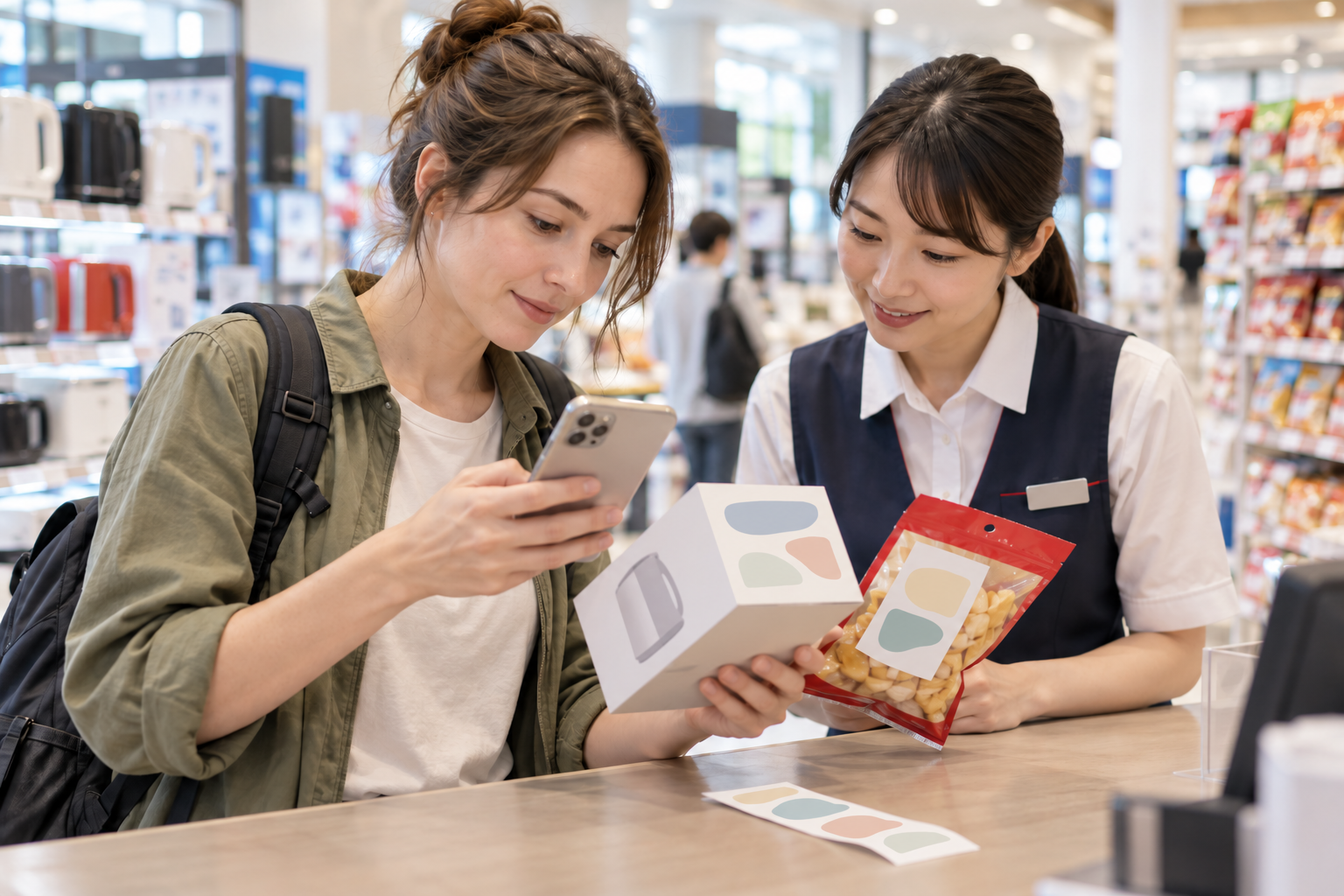
A familiar brand name or a matching product photo is not enough to decide whether a Japan purchase has been recalled. Notices usually identify a specific market version, model, manufacturing period, serial range or food lot. Save those details before discarding the box, then search the Japanese authority that covers the product category.
Capture the identity before you leave the store
Photograph the product name in Japanese, manufacturer or importer, full model, serial or manufacturing number, lot or batch, date code, capacity or colour variant, and the label showing where it was sold. Keep the receipt and warranty. A JAN barcode identifies a retail item, but it does not always identify the affected production run on its own.
For an appliance, check both the box and the rating plate on the unit. For food and cosmetics, keep the outer package and the section around the lot and date. Ikura Cart can help retain the Japanese product name for a later search, but a translated name never replaces the exact letters and digits on the original label.
Choose the portal by product type
Start with the Consumer Affairs Agency Recall Information Site for household appliances, electronics, clothing, toys, cosmetics, food and many other consumer goods. Search by the Japanese product or company name, then narrow by category. The site's own instructions warn that punctuation is not accepted as a keyword and that a displayed model range may index only its endpoints, so retry without hyphens and with shorter model fragments if the full code finds nothing.
Use NITE SAFE-Lite to search consumer-product accident and recall records, especially for electrical and household products. Use the separate official food recall search for food and labelling withdrawals. METI and the manufacturer's support page can confirm the current action. No single database covers every category, and an ordinary web result is not a substitute for the original notice.
Match every boundary in the notice
Compare the market, exact model, serial or lot range, manufacturing period, colour or capacity, and place of sale. Products that look identical can have different internal parts in Japan and another country. The OECD GlobalRecalls portal specifically cautions that a similar appearance does not make every market version part of the same recall.
Read the prescribed action, not just the reason. One notice may call for a refund, another for a replacement part, inspection, repair or a temporary change in use. Stop using the product when the notice says to stop. Do not open, modify, charge or test it to prove that the fault exists. Contact the company through the details linked by the authority or the official support site.
After you fly home, check the local notice too
A remedy offered in Japan may depend on the Japanese model, seller and service area. Check whether the manufacturer or regulator in your home market has published a separate notice, then ask who will handle a Japan-market unit and whether shipping is safe and prepaid. The OECD portal is useful for discovery, but the Japanese original and the notice for the country where you now hold the product control the practical next step.
If you are still in Japan and the seller or manufacturer will not explain an affected purchase, the Consumer Hotline for Tourists offers help in English, Chinese, Korean and other languages. Keep the product, packaging, receipt and all messages together. JNTO also advises travellers to inspect goods, confirm warranty and exchange terms, and retain the receipt for defective products.
FAQ
Can I check a Japanese recall with the barcode alone?
Not reliably. A JAN code may identify the retail item, while the notice may be limited by model, serial, lot, manufacturing date, colour or market. Keep all of those label details.
Why does the official recall search find nothing for my full model code?
Retry the Japanese brand or product name, remove punctuation such as hyphens, and search a shorter model fragment. The CAA notes that punctuation is not searchable and some model ranges may be indexed by endpoints.
Does a recall in another country automatically include my Japan model?
No. Similar-looking products can differ by market. Match the exact Japanese model and production range against the original notice.
What should I keep after buying an appliance or packaged food in Japan?
Keep clear photos of the Japanese label, model or lot, serial or date code, receipt, warranty and outer package until you have checked the item and used it safely.
Official sources
- Japan Consumer Affairs Agency: consumer safety and recall information
- Japan Consumer Affairs Agency: how to search the Recall Information Site
- Japan Consumer Affairs Agency: Recall Information Site
- Japan Consumer Affairs Agency: food labelling recall information
- NITE: SAFE-Lite product accident and recall search
- Japan Ministry of Economy, Trade and Industry: product recalls
- JNTO: advice for shoppers in Japan
- National Consumer Affairs Center: Consumer Hotline for Tourists
- OECD: GlobalRecalls portal and cross-market warning
- Panasonic Japan: October 2026 inspection and repair notice