 Ikura Cart
医薬部外品 Is a Product Category, Not a Strength Score
Updated 2026-10-16
Reviewed 2026-10-16
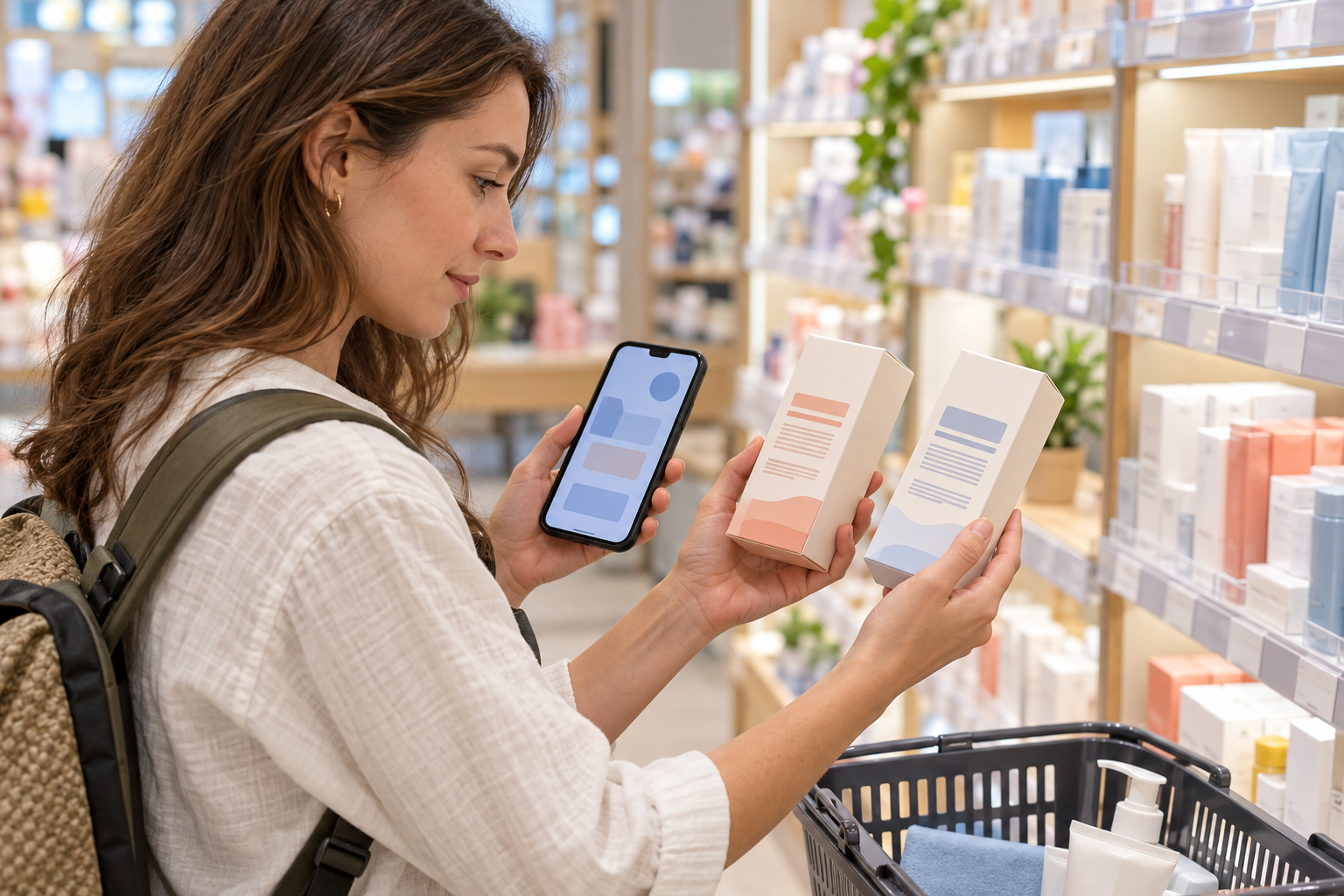
A face wash, lotion or deodorant in Japan may say 医薬部外品 or 薬用 even though it is sold beside ordinary cosmetics. These words describe how that exact product is regulated and what claim was approved in Japan. They do not mean prescription medicine, and they do not prove that the box is stronger or better for your skin.
Find the legal category before reading the front claim
Start with the small print on the container or outer box. 化粧品 means cosmetic. 医薬部外品 means quasi-drug. A medicated cosmetic may also use 薬用, but the category wording on the package is the more useful check. Japan's PMDA says quasi-drugs require approval product by product, with some established categories approved by prefectural authorities and others by the health minister.
This category is not a ladder from weak to strong. Ordinary cosmetics cover purposes such as cleansing, moisturising and keeping skin or hair in good condition. A quasi-drug has an approved active ingredient and a defined claim, often framed around prevention, such as preventing rough skin, acne, dandruff or body odour. Read the particular approved purpose rather than assuming that every quasi-drug treats a condition.
Separate the active ingredient from the rest of the formula
On a quasi-drug label, look for 有効成分, meaning active ingredient, and then その他の成分, meaning other ingredients. Cosmetic and quasi-drug ingredient names can differ because the two systems use different naming rules. A phone translation can help identify the headings, but save a clear photo of the original Japanese label so you can verify the exact ingredient later.
An ingredient highlighted on the front of an ordinary cosmetic is not automatically an approved active ingredient. Japan's 2025 guidance specifically warns that highlighting an ingredient used as an active in quasi-drugs must not make an ordinary cosmetic look as though it has that approved status. Ikura Cart can help capture the product name and label while comparing boxes, but the category line and ingredient headings carry more weight than a large marketing word.
Do not compare the two lists as if their order meant the same thing
For ordinary cosmetics, Japan requires a full ingredient list. The Ministry's labelling notice says ingredients are normally listed from higher to lower amount, while ingredients at 1 percent or less and colourants may appear in any order. That makes the top of a cosmetic list useful, but it does not reveal an exact percentage.
Quasi-drug labelling follows a different system. The Japan Cosmetic Industry Association explains that ingredient names follow the approved dossier and that broad ingredient display is handled through industry standards. Do not conclude that an ingredient is more concentrated simply because it appears earlier on one type of product than on the other. Compare intended use, active ingredient, directions and warnings instead.
- Category: 化粧品 or 医薬部外品
- Approved purpose written for that exact product
- 有効成分 and その他の成分 on a quasi-drug
- Directions, frequency, age or body-area restrictions
- Fragrance and any ingredient you already know you react to
- Box, batch code and receipt to keep after purchase
Make a skin-fit decision, not a category decision
Choose the product whose intended use, texture, fragrance and directions match the person who will use it. Quasi-drug approval supports a specific Japanese claim; it is not a promise of faster results, freedom from irritation or a better formula for everyone. The same package may also be classified or described differently when sold in the United States, United Kingdom, Australia or another home market, so do not translate 医薬部外品 into a local legal category by guesswork.
Avoid starting several unfamiliar products at once. Japan's cosmetics industry guidance says not to use cosmetics on injured or irritated skin and to stop if redness, swelling, itching, irritation, colour loss or darkening appears. Keep the box and ingredient panel. If symptoms are serious or continue, seek medical advice and show the original product information.
FAQ
Does 薬用 mean prescription medicine?
No. On skincare and personal-care products it often signals a medicated cosmetic classified in Japan as a quasi-drug. Confirm 医薬部外品 on the package and read the approved purpose.
Is a Japanese quasi-drug always stronger than a cosmetic?
No. The categories have different claims and approval routes. They are not a strength ranking, and suitability still depends on the full formula and the user.
Why does the ingredient list look different from an English version?
Japan uses Japanese display names, and quasi-drugs and cosmetics follow different naming systems. The overseas version may also have a different formula, so compare the exact model or product code and official local label.
What should I photograph in the store?
Capture the front, the line showing 化粧品 or 医薬部外品, the active and other ingredient sections, directions, warnings, product code, batch area and shelf label.
Official sources
- Japan Ministry of Health, Labour and Welfare: cosmetics and quasi-drug standards and notices
- PMDA: quasi-drug product approval and product categories
- Japan Cosmetic Industry Association: cosmetics and medicated cosmetics explained
- Japan Ministry of Health, Labour and Welfare: rules for full cosmetic ingredient labelling
- Japan Cosmetic Industry Association: cosmetic and quasi-drug ingredient-name FAQ
- Japan Ministry of Health, Labour and Welfare: 2025 guidance on highlighting cosmetic ingredients
- Japan Cosmetic Industry Association: precautions when using cosmetics
- Japan Cosmetic Industry Association: what to do when a skin problem occurs