 Ikura Cart
How to Read Food Allergen Labels in Japan
Updated 2026-09-21
Reviewed 2026-09-21
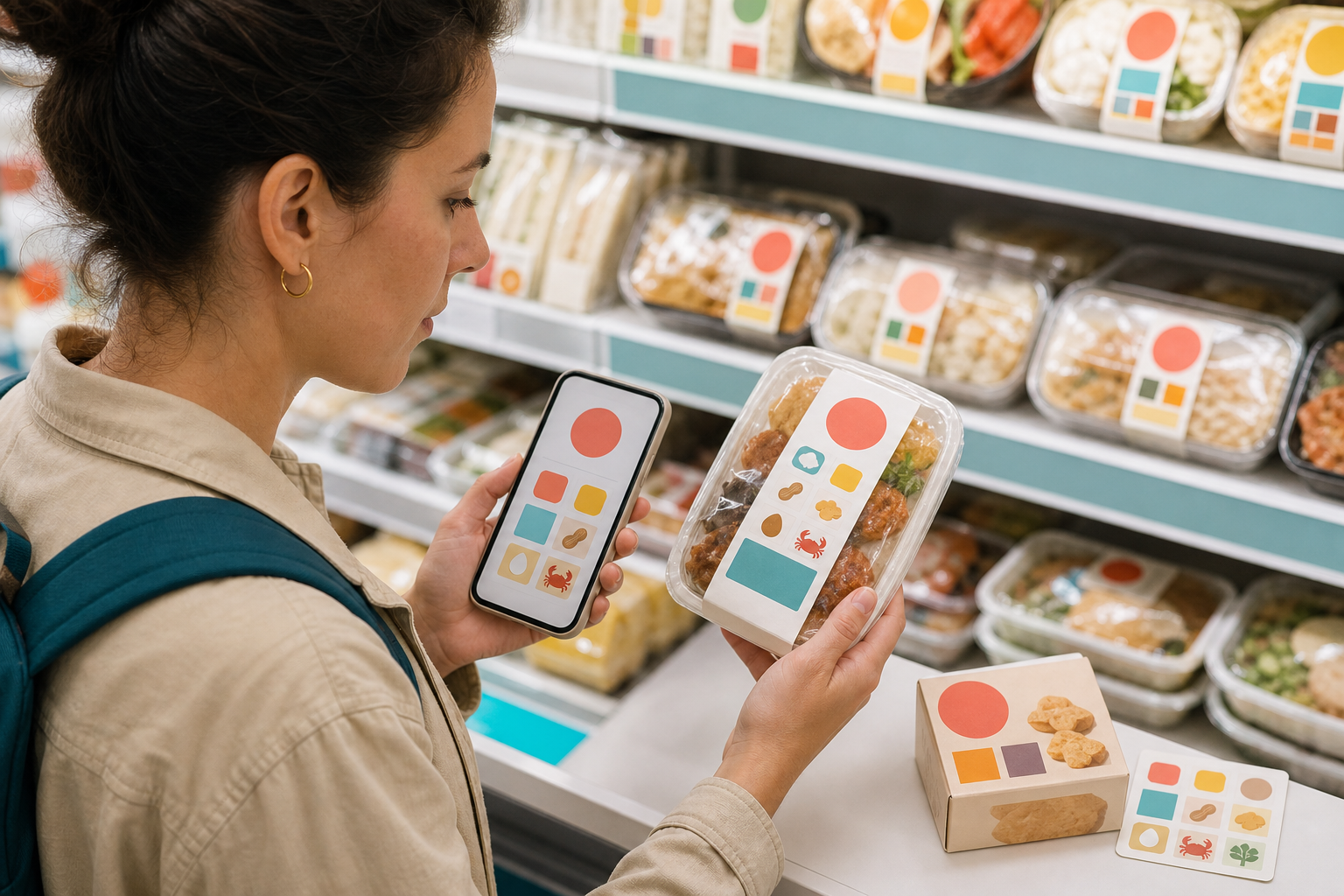
Packaged food in Japan can be easier to check than a restaurant meal, but the label system is not a universal safe-food guarantee. A major April 2026 update made cashew a mandatory allergen and added pistachio to the recommended list, with an important transition period for older packaging.
Start with the package type, not the food name
Japan requires specified allergens to be declared on packaged processed foods and relevant additives. This commonly covers sealed snacks, drinks, boxed meals, breads, and souvenirs carrying a Japanese ingredient label. The rule does not apply in the same way to loose bakery goods, food sold by weight, restaurant dishes, delivery meals, or alcohol.
A convenience-store meal may have a detailed printed label, while a visually similar deli item packed and sold at the counter may depend on voluntary information. Confirm that you are reading the label for the exact flavor and package size in your hand. Never transfer a result from a similar product or an older photo.
Know which 9 items must be declared
As reviewed on 2026-08-28, the mandatory group is shrimp, cashew nut, crab, walnut, wheat, buckwheat, egg, milk, and peanut. On a Japanese label, search for えび, カシューナッツ, かに, くるみ, 小麦, そば, 卵, 乳, and 落花生 or ピーナッツ.
The allergen may appear immediately after an ingredient, such as マヨネーズ(卵を含む), or in a collective statement containing 一部に and を含む. Milk may appear as 乳成分を含む, while an additive derived from milk can use 乳由来. There is no single universal icon box, so scan the full 原材料名 area and any separate allergy panel. The allergen panel is not built to answer vegetarian, vegan, halal or kosher questions, so those readers need the same full scan: look for かつおだし or かつお節 (bonito stock, which is not among the 29 allergen items at all), ゼラチン (gelatin), ポークエキス (pork extract), ラード (lard), 豚肉, 牛肉 and 鶏肉, remembering that gelatin and the three meats are recommended items only. If you avoid alcohol, note みりん (mirin): Japan's National Tax Agency describes it as an alcoholic drink made with shochu.
- Shellfish: えび means shrimp; かに means crab
- Nuts and peanut: カシューナッツ means cashew; くるみ means walnut; 落花生 or ピーナッツ means peanut
- Grains: 小麦 means wheat; そば means buckwheat
- Egg and milk: 卵 means egg; 乳 or 乳成分 means milk
The other 20 items are recommended, not guaranteed
Japan also recommends labels for almond, abalone, squid, salmon roe, orange, kiwi, beef, sesame, salmon, mackerel, soy, chicken, banana, pistachio, pork, macadamia nut, peach, Japanese yam, apple, and gelatin. Many manufacturers list them, but omission is not proof that a recommended item is absent. If your home label covers more than Japan's does, adjust before trusting a clean panel. The mandatory 小麦 entry means wheat only: the Consumer Affairs Agency handbook states that barley and rye are outside its scope, while the same handbook notes that EU, Australian, New Zealand and Canadian rules group wheat with rye, barley and oats. For a gluten-free diet, search the ingredient list yourself for 小麦, 大麦 (barley), ライ麦 (rye) and 麦芽 or モルト (malt, mostly barley according to the handbook), and treat 醤油 or しょうゆ (soy sauce) as a wheat source, as the handbook's own examples do. Sesame (ごま) sits in the recommended group, so a pack with no ごま line proves nothing. Tree nuts are not one category either: only walnut and cashew are mandatory, almond, pistachio and macadamia are recommended, and hazelnut (ヘーゼルナッツ), pecan, Brazil nut and pine nut are on neither list, so look for each nut by name.
Pistachio joined this recommended group on 2026-04-01. Cashew moved into the mandatory group on the same date, but businesses have a transition through 2028-03-31. A package made under the transition may still use an older format, so travelers with cashew allergy should not treat a missing カシューナッツ line as enough evidence by itself.
- Nuts and seeds: アーモンド, ごま, ピスタチオ, マカダミアナッツ
- Seafood: あわび, いか, いくら, さけ, さば
- Meat and soy: 牛肉, 大豆, 鶏肉, 豚肉
- Fruit and other items: オレンジ, キウイフルーツ, バナナ, もも, やまいも, りんご, ゼラチン
Use a stop rule when the label cannot answer the question
Translation and camera tools can help locate the product name and ingredient panel, but an unclear scan is not a medical clearance. Ikura Cart can help identify an item and organize what you are comparing in the shop. For an allergy decision, match the Japanese terms, check the current package, and contact the manufacturer or seller when wording or cross-contact information is uncertain.
For restaurants and unpackaged food, tell staff the exact allergen and ask whether ingredients and unintended contact can be confirmed. If they cannot confirm, choose another item. Follow the emergency plan and medication instructions given by your clinician. For breathing difficulty, loss of consciousness, or a rapidly worsening severe reaction in Japan, call 119 for an ambulance.
FAQ
Are all 29 Japanese allergen items mandatory on food labels?
No. Nine specified ingredients are mandatory and 20 additional items are recommended. A recommended item may be omitted even when the manufacturer has not confirmed its absence.
Does no cashew on a Japanese label mean cashew-free in 2026?
Not necessarily. Cashew became mandatory on 2026-04-01, but the transition runs through 2028-03-31, so older label formats can remain in circulation.
Do Japan's packaged-food allergen rules cover restaurants?
No. Restaurant, takeaway, loose, and made-to-order food does not follow the same mandatory package-label system. Information may be voluntary and cross-contact still needs direct confirmation.
Can I rely on a translation app to check a severe food allergy?
Use it only as an aid. Check the exact Japanese package, verify uncertain terms with the manufacturer or seller, and do not eat the item if the answer remains unclear.
Official sources
- Consumer Affairs Agency: Food Allergen Labeling Information
- Consumer Affairs Agency: Processed Food Allergen Labeling Handbook, April 2026
- Consumer Affairs Agency: Food Labeling Act and Current Standards
- Consumer Affairs Agency: Eating Out and Takeaway Food Allergy Guidance
- Consumer Affairs Agency: April 2026 Allergen Labeling Briefing
- Consumer Affairs Agency: June 2026 Label Enforcement Briefing
- Japan National Tourism Organization: Japan Travel FAQ
- Fire and Disaster Management Agency: Ambulance Guide for Visitors
- National Tax Agency (Tokyo Regional Taxation Bureau): About mirin and other liquors