 Ikura Cart
How to Read Origin Labels on Japanese Food
Updated 2026-09-21
Reviewed 2026-09-21
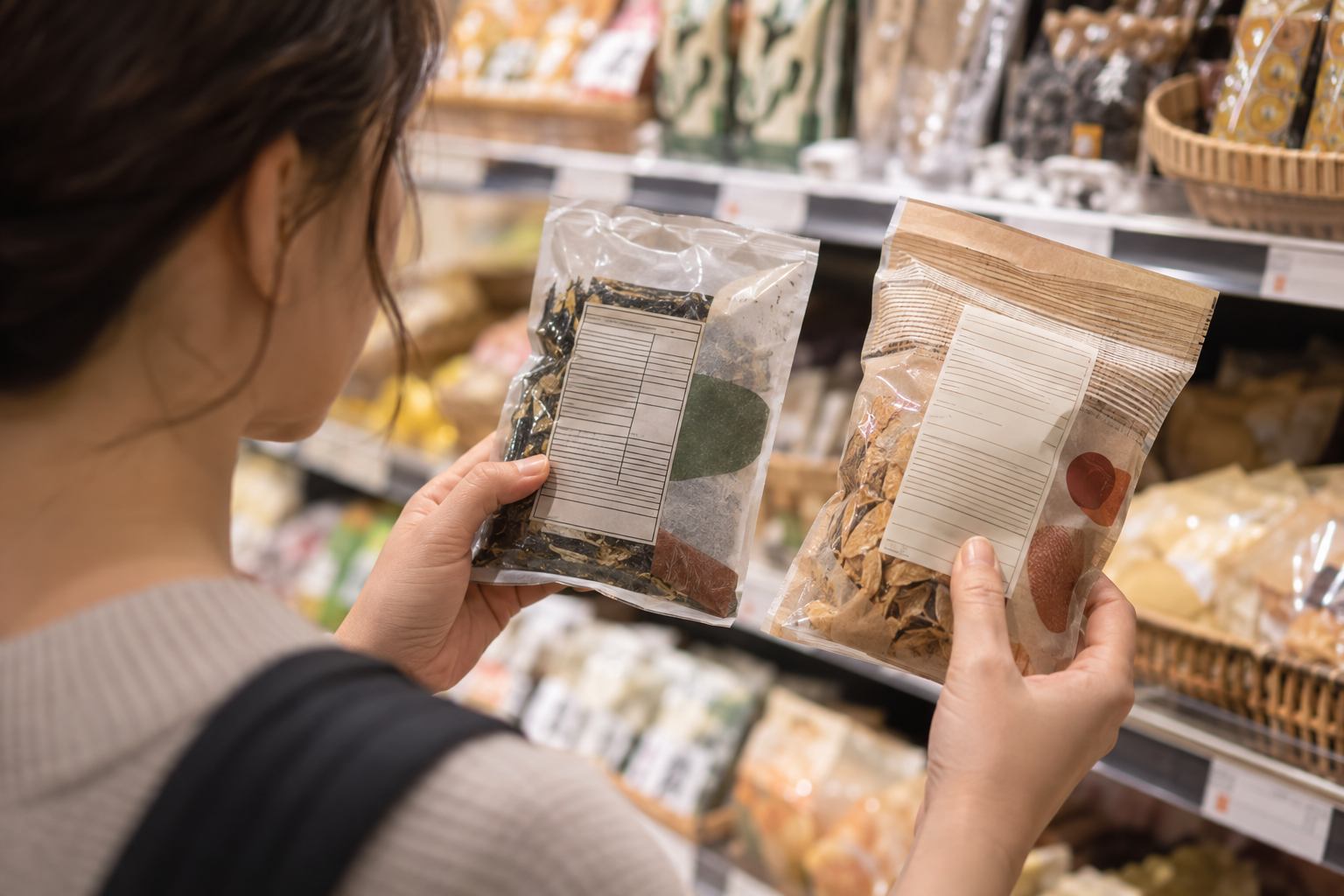
A Japanese brand name or a familiar regional picture does not tell you where every ingredient was grown. On packaged food, first decide whether you are reading the origin of the finished product or the origin of an ingredient. The small distinction between 国産 and 国内製造 matters most when buying processed snacks to take home.
Find the right line on the package
On a Japanese label, 原産国名 identifies the country of origin of an imported finished processed food. 原料原産地名 concerns an ingredient in a processed food made in Japan. The latter generally covers the ingredient with the largest share by weight, with special rules for certain food groups and products.
Start at the ingredients panel, 原材料名, and look for a place in parentheses after an ingredient. A manufacturer address or a Japanese distributor's name is a different piece of information. Japanese food labels are required to be in Japanese when the food is sold in Japan, so save the terms before you shop.
国産 and 国内製造 answer different questions
If the indicated ingredient is a fresh agricultural or animal ingredient, 国産 says that ingredient is from Japan. A named country followed by 産 gives another origin. For example, an ingredient marked 小麦(国産) points to Japanese wheat, but says nothing by itself about every other ingredient in the biscuit.
If the indicated ingredient is itself processed, 国内製造 says that ingredient was manufactured in Japan. It does not establish where its underlying crops were grown. 小麦粉(国内製造) can describe flour milled in Japan from imported wheat. Likewise, a finished product made in Japan should not automatically be treated as entirely Japanese-grown.
Read multiple origins without guessing
A comma-separated list such as 国産、アメリカ産 normally puts origins in descending order of use. 又は means the origin can vary among those listed and the order follows a stated past record or supply plan, so check the accompanying note. その他 can stand for additional origins under the rules.
An imported finished processed food normally displays 原産国名 instead of the Japanese ingredient-origin label. Restaurant food and prepared food sold where it is made are outside this particular ingredient-origin requirement. If a souvenir needs a specific origin for a gift or dietary choice, ask the maker using the contact information on the pack rather than filling a gap with a guess.
A quick shelf check for souvenirs
Compare two boxes by reading the ingredient named beside the origin, not just the largest country name on the wrapper. Then check 賞味期限 for best-before information and the allergen statement separately. Origin is not a safety rating or an allergy guarantee. Read origin and ingredients together with one more question in mind: what is in this that I must declare or avoid? Australia, New Zealand and the United States all require arriving travellers to declare food such as meat and other animal products, and an undeclared item can bring a fine, so note any meat, dairy or egg content (肉, 乳, 卵 in the ingredient list) and check the Department of Agriculture, Fisheries and Forestry, MPI or CBP before you fly. The same lines answer halal and vegetarian needs.
A camera translator can help you locate 原材料名, 原料原産地名 and 原産国名. Ikura Cart can then help compare the shelf price and your shopping total. Keep the original package for any question that requires exact ingredient or origin confirmation.
FAQ
Does 国内製造 mean all ingredients are from Japan?
No. It says the indicated processed ingredient was manufactured in Japan; the origin of its underlying raw materials may differ.
Does 国産 on one ingredient mean the whole snack is Japanese-grown?
No. It refers to the ingredient marked with that origin. Check the entire ingredient list for other components.
What is the difference between 原産国名 and 原料原産地名?
原産国名 identifies an imported finished food's country of origin. 原料原産地名 identifies the origin or manufacturing place of a relevant ingredient in a domestically made processed food.
What does 又は mean between two countries?
It means the origin can vary between listed places. Read the adjacent note about the period or supply plan used for the display.
Official sources
- Consumer Affairs Agency: Country of Origin Labelling
- Consumer Affairs Agency: Consumer Q&A on Ingredient Origin
- Consumer Affairs Agency: Food Labelling in English, Chinese and Korean
- Ministry of Agriculture, Forestry and Fisheries: Processed Food Ingredient Origin
- e-Gov: Food Labelling Standards
- Australian Department of Agriculture, Fisheries and Forestry: Bringing or mailing goods to Australia
- New Zealand Ministry for Primary Industries: What happens if you fail to declare
- US Customs and Border Protection: Bringing agricultural products into the United States